Adult ballet classes in Apopka, Florida are quietly becoming one of the most effective fitness choices for residents who want real, lasting results, not just another workout trend. If you've been curious about ballet as a serious training method, this post breaks down the physical science behind it and why it works so well for adult bodies.
Ready to see what structured movement can do for your joints, posture, and strength? Call 3D Motion Dance Center at (407) 786-0269 to ask about adult class availability.
What Actually Happens to Your Hips During Turnout?
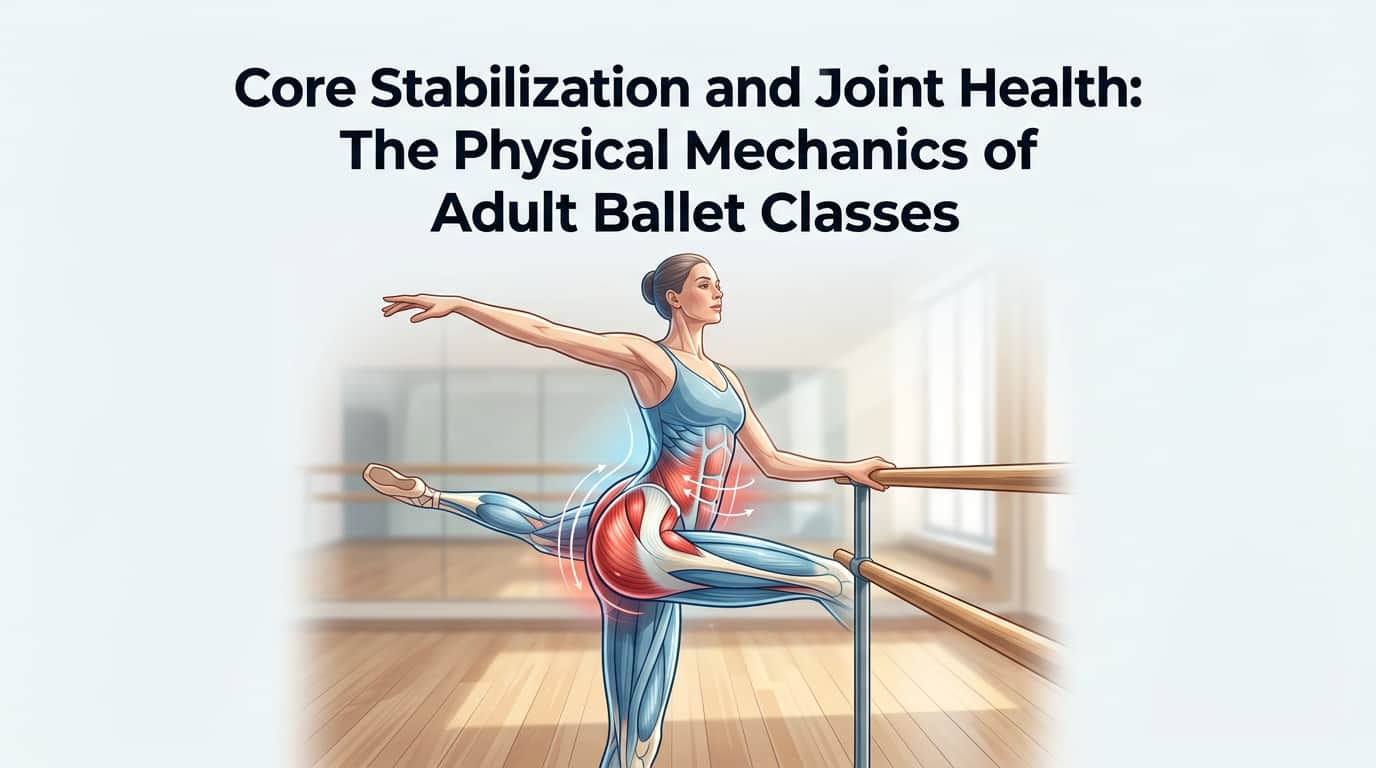
Turnout, the outward rotation of the legs from the hip socket, is one of ballet's most recognized positions. Done correctly, it's a full muscular engagement of the deep external rotators: the piriformis, obturator internus, and gemellus group. Done incorrectly, it collapses the arch, strains the knee, and loads the hip socket unevenly.
For adult learners in the Apopka area, this distinction matters enormously. Many adults attempt to force turnout from the knee or ankle rather than initiating from the hip. A qualified instructor will redirect that rotation upward to its proper source, protecting the joint and building the correct muscular chain over time. With consistent training, most adults see measurable improvement in hip mobility within 8 to 12 weeks.
How Does Core Stabilization in Ballet Differ From Regular Ab Training?
Ballet core work targets the transverse abdominis, the deep cylindrical muscle that wraps around your spine like a corset, not the surface-level rectus abdominis most people train at the gym. Activating this muscle before movement, what instructors call "engaging your center," creates spinal stability from the inside out.
This matters for balance, posture, and injury prevention at every age. The transverse abdominis connects directly to the thoracolumbar fascia, meaning a well-trained core stabilizes both your lower back and your pelvis simultaneously. Most gym-based core routines don't train this coordination. Ballet does, every single class.
Adults who train this system consistently report measurable improvements in posture and a reduction in lower back discomfort within the first 6 to 8 weeks of regular barre work.
Is Low-Impact Ballet a Smart Long-Term Fitness Choice for Adults?
Yes, and the reasoning is straightforward. Ballet is a non-impact discipline, meaning your joints don't absorb the repetitive ground force associated with running or high-intensity interval training. For adults over 35, this is a meaningful advantage. Cartilage doesn't regenerate the way muscle does, so protecting joint surfaces while still building strength is a real long-term gain.
Research consistently shows that low-impact exercise maintains joint health while preserving muscle mass, both of which decline steadily after age 40 without deliberate training. Ballet specifically builds the smaller stabilizing muscles around the knee, hip, and ankle that most fitness programs miss entirely. Those muscles are what keep you mobile and balanced as the decades pass.
For residents near the Northwest Recreation Complex in Apopka, adult ballet classes offer a structured, progressive training environment that fits into a real schedule without wrecking your body in the process.
What Should You Look for in a Florida Ballet Studio?
Floor surface is one detail most prospective students overlook, and it's one of the most critical factors for joint safety. Proper sprung floors absorb shock rather than transferring it directly into ankles, knees, and hips. A studio with concrete or hard tile underneath the floor covering provides none of that protection.
At 3D Motion Dance Center in Apopka, the studio environment is designed with serious training in mind. Instructors are trained to work with adult learners specifically, adapting technique cues for bodies with different histories, injuries, and flexibility levels. That distinction between a children's dance school and an adult-focused training environment is significant, and it's worth asking about before you commit to a studio.
Florida's climate adds another layer of consideration. The heat and humidity common in the Apopka area from April through October mean joints are generally warmer and more pliable during class, but hydration and a proper warm-up still matter. Coming in cold and skipping the early barre work is one of the fastest ways to strain a calf or hip flexor.
How Do You Protect Your Knees and Ankles at the Barre?
Knee and ankle alignment in ballet comes down to one consistent principle: the knee tracks over the second toe. Whenever that relationship breaks down, whether in a plié, a tendu, or a relevé, the medial structures of the knee absorb compensatory load they weren't designed to handle.
Here are the alignment checkpoints that matter most during barre work:
- Plié: Keep the knee stacked over the second and third toes throughout the entire range. Don't let it roll inward.
- Relevé: Rise evenly through all five toes. Sickling the ankle outward or winging it inward both compromise the subtalar joint over time.
- Grand battement: Stabilize the standing leg completely before the working leg lifts. An unstable pelvis during kicks puts direct strain on the lumbar spine.
- Center work: Transitions between positions should be controlled, not rushed. Most ankle injuries in adult ballet happen during uncontrolled weight shifts, not during held positions.
Instructors who work with adult learners regularly build in regular alignment checks rather than pushing through discomfort. If a studio doesn't do this, that's a sign worth noting.
Bringing Ballet Mechanics Into Daily Life
The physical training that happens in adult ballet classes in Apopka, Florida doesn't stay on the studio floor. The core engagement, the hip stability, the awareness of how your foot loads the ground, all of it transfers directly into how you walk, sit, stand, and move through your day.
Over time, this kind of training builds the proprioceptive awareness that reduces fall risk, improves posture at a desk, and keeps the hips and spine functional well into later decades. Adults who commit to 2 to 3 classes per week typically notice changes in daily movement quality within 4 to 6 weeks. That's not a small thing. That's how you stay mobile and strong for the long run.
If you're ready to start building that foundation, reach out to 3D Motion Dance Center at (407) 786-0269. The team works with adult beginners and returning dancers alike, and the first step is just showing up.