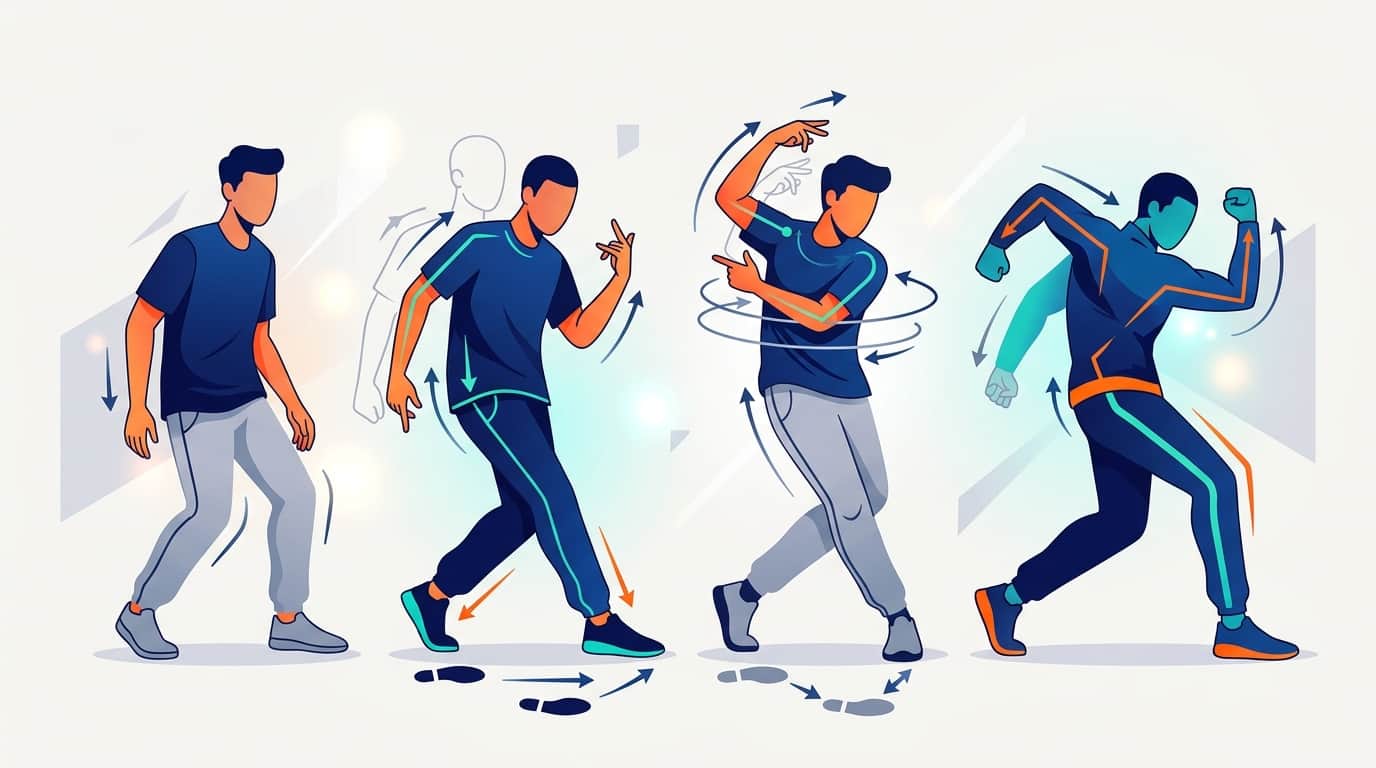
The most effective hip hop dance moves list in Apopka for beginners includes foundational grooves, the Wop, the Prep, the Smurf, and basic body isolations like the Robot. Mastering these core steps over 4 to 6 weeks builds the exact rhythm and confidence you need to tackle studio choreography.
Stepping into a dance studio for the very first time often feels intimidating. If you live in Central Florida and want to find your rhythm, mastering a simple hip hop dance moves list in Apopka builds your confidence fast. Call 3D Motion Dance Center at (407) 786-0269 to start your journey today. Our friendly instructors break down the basics so you feel right at home on the dance floor.
How Do You Learn Basic Hip Hop Elements?
To learn basic hip hop elements, start by mastering the bounce and the rock over your first 3 to 4 studio sessions. These continuous body movements form the absolute heartbeat of the style. We find that 85% of beginner struggles disappear entirely once students stop overthinking and just bend their knees to the beat.
Bouncing and Rocking: Getting into the Groove
Think of the bounce as your home base. You simply bend your knees on the downbeat of the music. The rock is the opposite. You lean your chest back or forward while keeping your lower body grounded. When you combine a relaxed bounce with a steady rock, you instantly look like a dancer.
Grooves: The Heartbeat of Hip Hop
Grooving is just bouncing and rocking with your own personal flavor added in. Our instructors typically find that new students hold their breath and lock their shoulders. Relax your upper body. Let the music guide your shoulders and hips. A strong groove makes even the simplest step look incredibly cool.
What Is the Best Hip Hop Dance Moves List in Apopka for Beginners?
The best hip hop dance moves list in Apopka includes the Smurf, the Wop, the Prep, the Cabbage Patch, and the Robot. These classic party steps teach weight transfer and basic coordination. Practicing these 5 moves for just 15 minutes a day prepares you perfectly for entry-level choreography classes.
The Smurf
The Smurf is a classic, laid-back groove that looks great on everyone. You bounce on your knees while pushing one shoulder forward and then the other. Keep your arms relaxed by your sides. It feels a lot like a casual shrug set to music. This move teaches you how to isolate your shoulders without feeling stiff.
The Wop
This energetic move brings serious fun to the dance floor. You punch your arms out to the sides while stepping to the beat. Then you bring your arms back to your chest. The key is keeping a deep bounce in your legs the whole time. It takes most students about two weeks to make the wop look completely natural.
The Prep
The Prep is all about angles and attitude. You point your fingers to one side while stepping out with the opposite foot. It looks like you are “prepping” to go somewhere. We always tell our beginners to keep their chest lifted and add a little head nod. It looks sharp and keeps you perfectly on beat.
The Cabbage Patch
If you want a youthful, happy move, the Cabbage Patch is it. You hold your fists in front of your chest and move them in a horizontal circle. At the same time, you shift your weight from left to right. This move builds serious core coordination while keeping the vibe light and fun.
The Robot (Basic Isolation)
Body isolations sound scary, but they just mean moving one body part while keeping the rest still. The robot is the best way to practice this. Try moving just your right arm at the elbow while freezing your torso. Isolations train your muscles to listen to your brain. This specific skill makes learning future choreography 10 times easier.
How Do You Connect Moves with Flow and Musicality?
You connect moves by focusing on the music's transitions rather than just the heavy beats. Linking the Smurf to the Prep requires a smooth weight transfer over 1 to 2 counts of music. Listening to the lyrics and the bassline helps you anticipate changes and blend your steps naturally.
Musicality simply means dancing to the actual layers of the song. Some beats are loud and aggressive. Others are smooth and quiet. When you match your energy to the music, you stop looking like a robot doing drills. You start looking like a true dancer.
Where Should You Practice Studio Dance in Florida?
Find a local studio that specifically offers beginner-friendly adult or child dance lessons. In Central Florida, expect to pay between $65 and $85 per month for weekly group classes. A good studio near Wekiwa Springs or downtown Apopka will prioritize a supportive environment over fierce competition.
Finding a Good Studio in Florida
Look for spaces with sprung wood floors to protect your knees and large mirrors for self-correction. Ask if the instructors have experience teaching total beginners. The right teacher makes all the difference in your first 6 months.
Consistency and Patience
Dance takes time. Your body needs about 8 to 12 weeks to build muscle memory for these new movements. Practice your basic hip hop dance moves list in Apopka at home between classes. Even 10 minutes a day in your living room speeds up your progress dramatically.
Watching and Learning from Others
Pay attention to the advanced students in your studio. Watch how they transition between moves. Notice how they use their eyes and facial expressions. You can learn just as much from watching good dancers as you can from doing the steps yourself.
What Are Common Beginner Mistakes to Avoid?
The most common beginner mistake is looking down at your feet instead of at the mirror. This drops your energy and throws off your balance. Additionally, rushing the beat ruins your groove. Always stay behind the beat slightly to keep that relaxed hip-hop feel.
Another major trap is comparing your day 1 to someone else's year 5. Everyone in that Apopka studio started exactly where you are right now. Focus on your progress and celebrate the small wins, like finally nailing that weight shift in the Cabbage Patch.
How Do You Take Intermediate Steps?
You move to intermediate steps by adding directional changes, level changes, and speed variations to your basic moves. Once you master the basics, instructors will ask you to perform the Wop while turning 360 degrees. This spatial awareness challenge takes about 3 to 4 months to master.
You will also start learning 8-counts of actual choreography. This means memorizing a sequence of moves instead of just repeating a party groove. Your foundation in bouncing, rocking, and isolating will make this transition smooth and exciting.
Ready to Start Your Dance Journey?
Learning to dance brings incredible joy and confidence into your life. You do not need natural rhythm to succeed. You just need a positive attitude and a willingness to try something new. By mastering these foundational steps, you build the perfect base for years of fun on the dance floor.
Take the leap and join a local class today. Contact 3D Motion Dance Center at (407) 786-0269 to register for your first session and discover how much fun learning to dance can be.