If your child has been dreading dance class lately, you are not alone. Mid-season switches happen more often than most Apopka families realize, and finding the right fit is worth the change. To find out whether 3D Motion Dance Center is the right next step, call us at (407) 786-0269 or schedule a trial visit with no pressure and no commitment.
Leaving a studio mid-season feels like a big decision, and it is. But staying in the wrong environment because the timing is uncomfortable often costs more in the long run, both in tuition paid for classes your child dreads and in the enthusiasm that quietly drains away the longer the situation continues. Apopka families switching studios deserve a clear picture of what a healthy program looks like and what questions to ask before they enroll. Here is what actually matters.
How Does a Good Studio Place a Transferring Student at the Right Level?
Placement is the first thing a new studio should address, and how they handle it tells you a great deal about how they run everything else. A studio that automatically slots a transferring child into the class that matches their age, or the one that still has open spots, is not thinking about your child. They are thinking about their schedule.
A well-run program asks questions first. What styles has your child studied? How long have they been dancing? What did they enjoy, and what felt frustrating? For older students, a brief observation or movement assessment lets the instructor see how the child carries technique before assigning a class. This does not need to be formal or intimidating. At our studio, it is a conversation and a short look, not an audition. The goal is to find the class where your child will be challenged without being overwhelmed, because that is the environment where progress actually happens.
Getting placement right matters especially for a mid-season transfer. A child who lands in a class that is too advanced spends the next few months feeling behind. One who lands too low gets bored fast. The right level means your child arrives at the recital having actually grown, not just survived the rest of the season.
What Class-Size and Instructor Questions Should You Ask?
Class size shapes the experience more than almost any other factor, and it is one of the easiest things to ask about directly. In a class of eighteen students, a child who is still finding her footing after a studio switch may go an entire hour without meaningful individual feedback. In a smaller group, the instructor can correct, encourage, and adjust in real time. Ask the studio what the cap is for the class your child would join, and ask what the current enrollment actually is. Those two numbers are not always the same.
Instructor continuity matters too. Some studios rotate teachers frequently across classes, which can feel unsettling for a child who just went through the disruption of leaving one program. Ask whether the same instructor leads the class each week, and whether that instructor has taught this age group long enough to understand how kids at this stage learn and what keeps them motivated. Experience with young students is a specific skill. It is not the same as technical proficiency in dance, and both matter.
It is also reasonable to ask about the instructor's approach to corrections. Studios that rely heavily on public correction in front of peers can feel harsh to a child who is already navigating the vulnerability of being new. A good teacher corrects with care, builds confidence alongside technique, and makes sure the new student feels welcomed rather than evaluated.
How Do Billing and Recital Timing Work When You Join Mid-Year?
This is the practical question most families hesitate to ask, and it deserves a straight answer. Mid-season enrollment typically means prorated tuition for the remaining weeks of the term, though policies vary. Ask whether the studio prorates monthly fees or requires full-term payment regardless of when you join. Ask whether there is a registration or costume fee that applies even for late enrollees, and when costume measurements need to happen if your child is going to participate in the spring recital.
Recital participation for mid-season transfers depends on the studio and the timing. Some programs can fold a new student into an existing routine with a few extra rehearsals. Others have a cutoff date after which a transferring student may observe the recital rather than perform. Neither answer is wrong, but you deserve to know before you sign anything. A studio that is honest about its recital timeline and gives you a clear picture of what is and is not possible is a studio that respects your time and your child's expectations.
Ask about the costume situation specifically. In many programs, costumes are ordered months in advance, and a late transfer may need a rush order or an alternative arrangement. Getting clarity on this in the first conversation prevents a lot of frustration in March.
What Does a Low-Pressure Trial Visit Actually Look Like?
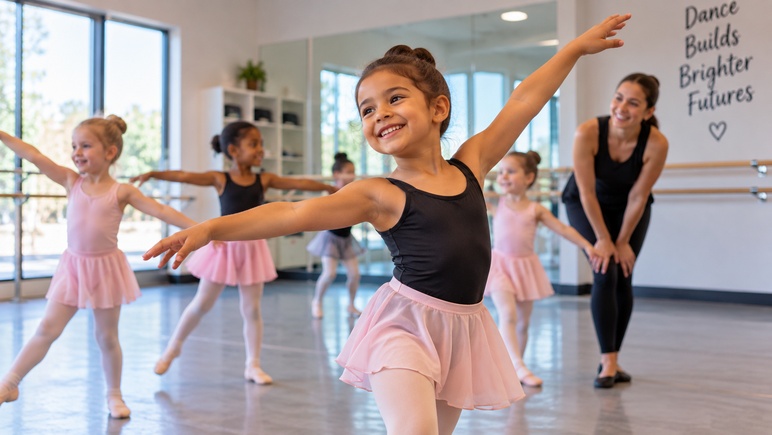
A trial class should feel like an invitation, not an interview. Your child should be able to walk in, follow along, and get a genuine sense of the environment without any obligation attached. The instructor should know a new student is coming and make a point of welcoming them without making them the center of attention in a way that feels uncomfortable.
We recently had a family come to us after their six-year-old had grown bored at her previous studio. They were nervous about switching mid-season and worried she might fall behind before the recital. We placed her in a class where she could actually thrive, worked with her on the choreography she had missed, and made the transition as smooth as we could. Her parents told us afterward that it was her best recital yet. That outcome does not happen by accident. It happens when a studio takes the placement seriously and treats the new student as someone worth investing in from day one.
A trial visit is how you find out whether a studio feels like that for your child. Watch how the instructor handles the group. Notice whether the kids seem engaged or restless. Pay attention to how your child looks when they come out. Enthusiasm after a first class is a reliable signal.
If your child is ready for a fresh start, 3D Motion Dance Center offers child dance lessons in Apopka with small classes, consistent instructors, and a genuine welcome for transferring students at any point in the season. Call (407) 786-0269 or reach out to schedule a trial class and see for yourself.